In this guide
When you set up payments for a small product, the fee looks like a rounding error: under a dollar on a $20 sale. Nobody builds a spreadsheet for a rounding error. Six months later, it's the largest line on your bill.
This guide takes card fees apart, piece by piece, then works out what they cost at different prices and customer counts. It also covers the two costs that don't show up until they happen: refunds and disputes.
The short version
- On a $20 monthly subscription, you lose about $1.02 per payment with a direct processor and subscription billing, or $1.50 with a merchant of record that also handles sales tax.
- The fixed part of the fee (30–50¢) hurts low prices most: at $10, fees take 6.6–10%.
- Refunds don't give fees back, and each dispute costs $15 or more. Both are worth designing around.
The anatomy of a card fee
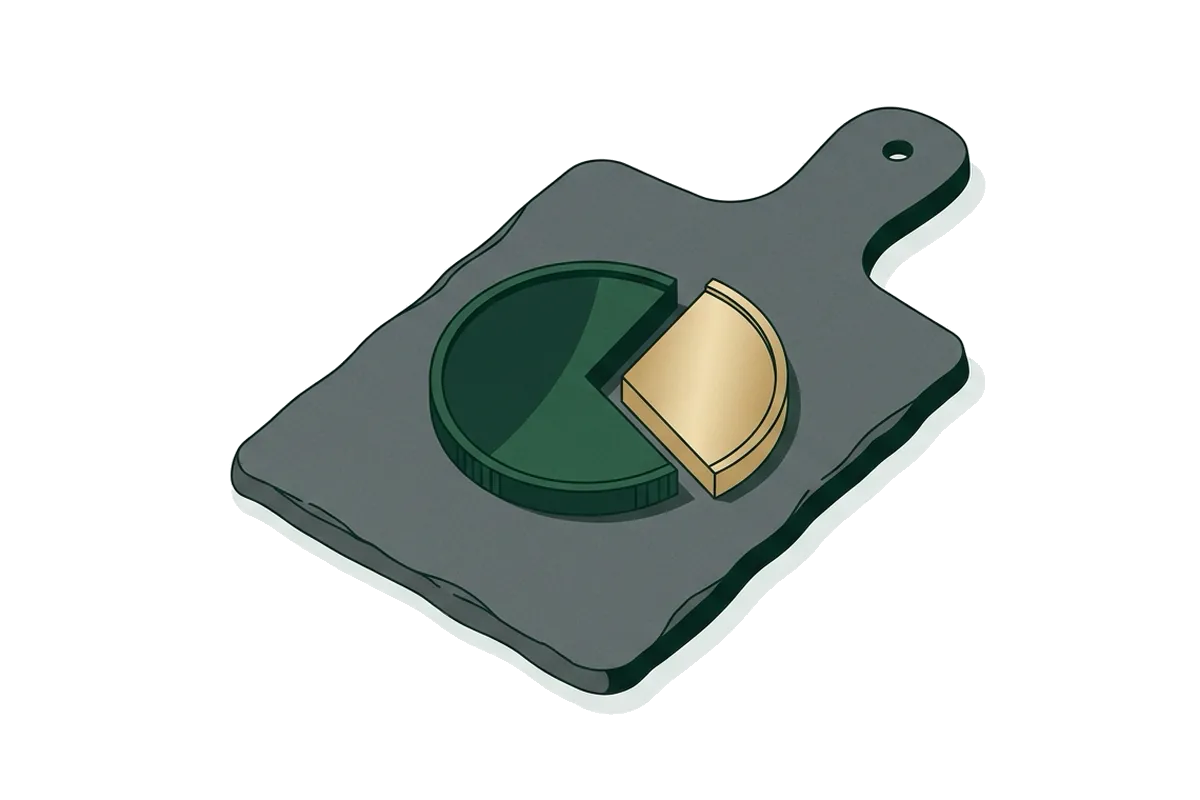
With Stripe in the US, the standard rate is 2.9% + 30¢ per successful domestic card charge[1]. That's two separate costs that behave differently:
- The percentage (2.9%) scales with the price. It's the same share whether you charge $5 or $500.
- The fixed fee (30¢) is the same on every charge. It's a large share of a small payment and a small share of a large one.
Then come the extras, which depend on how you bill and who your customer is[1]:
| Extra | Cost | When it applies |
|---|---|---|
| Subscription billing | 0.7% of billing volume | Recurring billing through Stripe Billing on pay-as-you-go |
| International card | +1.5% | Customer's card was issued outside your country |
| Currency conversion | +1% | Payment converted from another currency |
| Tax calculation | 0.5% per transaction | Stripe Tax basic plan, no-code integration, where you're registered |
| Dispute | $15, plus $15 to respond manually | A customer's bank reverses a payment |
A $20 subscription, worked out
Now the same payment from a customer abroad. Add 1.5% for the international card ($0.30), and another 1% if the payment is converted from their currency ($0.20):
A merchant of record works differently. Paddle charges 5% + 50¢ per checkout transaction[3], and Lemon Squeezy charges 5% + 50¢ with small additional fees on some sales outside the US[4]. In return, they become the legal seller and handle sales tax and VAT for you. On a $20 payment that's $1.50, or 7.5%.
How price changes the picture
| Monthly price | Direct + billing | Share | Merchant of record | Share |
|---|---|---|---|---|
| $5 | $0.48 | 9.6% | $0.75 | 15.0% |
| $10 | $0.66 | 6.6% | $1.00 | 10.0% |
| $20 | $1.02 | 5.1% | $1.50 | 7.5% |
| $50 | $2.10 | 4.2% | $3.00 | 6.0% |
| $100 | $3.90 | 3.9% | $5.50 | 5.5% |
The fixed fee is why the share falls as price rises. At $5, nearly a tenth of every payment goes to fees with a direct processor. At $100, under 4%. Paddle notes that for products under $10 it offers custom pricing on request[3], which tells you how much the fixed fee matters at that level.
Why fees overtake everything else
Hypothetical example
A $20 product with typical first paid tools: hosting, a database and an email service totalling about $65 a month.
| Customers | Revenue | Tools | Card fees | Fees share of bill |
|---|---|---|---|---|
| 10 | $200 | $65 | $10 | 14% |
| 50 | $1,000 | $65 | $51 | 44% |
| 100 | $2,000 | $65 | $102 | 61% |
| 500 | $10,000 | ~$85 | $510 | 86% |
Tools grow in steps: you pay the same email plan at 50 customers as at 300. Card fees grow with every payment. That's why they become the biggest line, and why The $167 bill ends where it does.
None of this means your margins are bad: at 100 customers you still keep over 90% of revenue. It means that when you look for savings, look at payments before tools.
Refunds: the fee you don't get back
When you refund a customer through Stripe, the processing fees from the original charge aren't returned[2]. You return the full $20 and still pay the $0.88 card fee (and the conversion fee, if there was one). For card refunds on standard pricing there's no extra fee for the refund itself[2], but the original fee is gone.
That has two practical consequences:
- Free trials without a card charge cost nothing in fees if someone cancels. "Charge now, refund if unhappy" costs you the fee every time.
- A generous refund policy is still worth it for trust, but price in the cost: a few refunded payments a month cost a few dollars.
Disputes: the expensive one

A dispute (or chargeback) happens when a customer asks their bank to reverse a payment instead of asking you. Stripe charges $15 for each dispute received, another $15 if you respond to it manually (refunded only if you win), and $15 to appeal[1]. On a $20 sale, one dispute can cost more than the sale itself.
Most disputes on small subscriptions aren't fraud. They're people who don't recognise the charge or couldn't find how to cancel. Three cheap fixes:
- Make the name on the card statement recognisable. Use your product name, not a legal entity nobody's heard of.
- Put a cancel button where people look for it, in account settings, and mention it in the receipt.
- Send a reminder before yearly renewals, with the date and amount.
Direct processor or merchant of record?
The choice is mostly about sales tax, not the fee. We cover the tax side in depth in Selling software to other countries. In brief:
A direct processor tends to fit when
- Most customers are in your own country
- You'll register for and file sales tax where required, or use a tax add-on
- You want the lowest per-payment fee and full control of checkout
A merchant of record tends to fit when
- You sell to many countries from day one
- You're one or two people and don't want to track tax rules
- 2–3 extra percentage points cost less than your time or an accountant
Five ways to pay less
- Offer a yearly plan. One charge a year pays the fixed fee once instead of twelve times. See Monthly vs yearly.
- Avoid very low prices. Below about $10, the fixed fee takes a big share.
- Price in your customers' currency where you can, to avoid conversion fees.
- Prevent disputes with a clear statement name, an easy cancel button and renewal reminders.
- Prefer trials without a charge over "pay now, refund later".
Questions
Can I pass card fees on to customers?
Rules on surcharging vary by country and US state, and card networks have their own rules. For a small subscription, it's simpler to set a price that already covers fees.
Do these numbers include the processor's monthly fee?
There isn't one on pay-as-you-go plans. Stripe's Billing fee is a percentage of billing volume, not a monthly charge; a fixed monthly Billing plan exists but is aimed at much larger businesses.
Is 5% normal for payments?
For a $20 subscription with recurring billing, around 5% with a direct processor and 7.5% with a merchant of record is typical. The share falls as your price rises.
Should I accept other payment methods?
Bank debits and wallets can lower fees in some countries, but add complexity. Start with cards, and add methods when customers ask for them.
Take your planned price and expected customers in six months, and work out fees with the table above. If fees will be more than a third of your bill, consider a yearly plan from launch. Try different prices in the bill calculator.
What builders are saying
Real public threads on this topic, so you can hear it from people who hit these limits themselves. Summaries are ours; follow the link for the full discussion.
Sources
Checked 14 November 2026. Numbers in brackets in the text point to these sources.